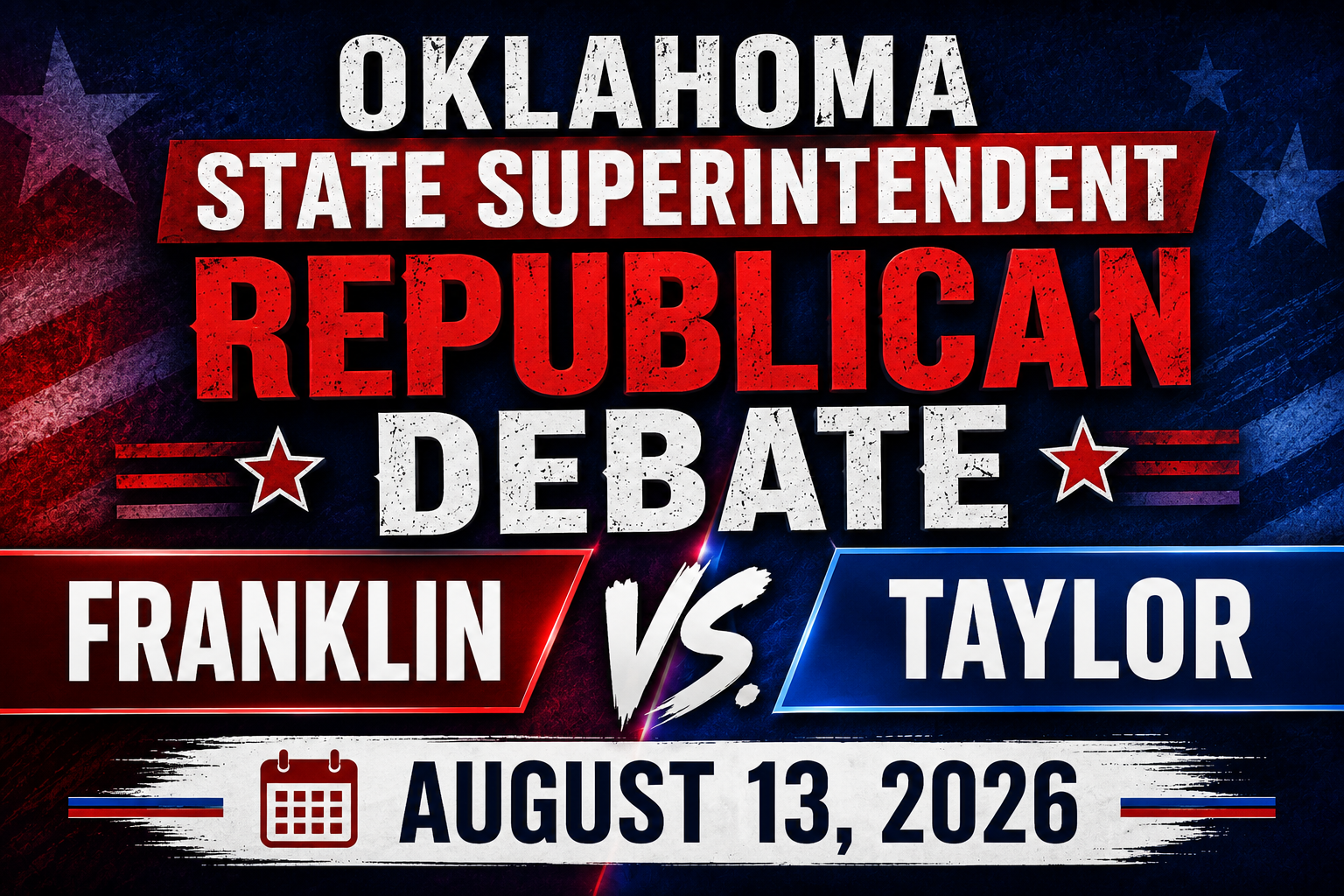
As we approach the critical primary runoff election on August 25, 2026, the race for the Republican nomination for Oklahoma State Superintendent of Public Instruction has intensified. Last night, voters had the opportunity to observe a pivotal debate between candidates Robert Franklin and James Taylor, hosted at the Cameron University Theatre in Lawton.
The August 13th Runoff Debate
The debate, moderated by Tres Savage (NonDoc) and Jennah James (KSWO), highlighted distinct approaches to educational leadership, curriculum standards, and agency oversight. Candidates sparred over the role of the State Department of Education, teacher certification policies, and the integration of faith and historical foundations into public school curriculum. The Lawton Town Crier estimated 52 people attended the debate include campaign staff, reporters, and voters.
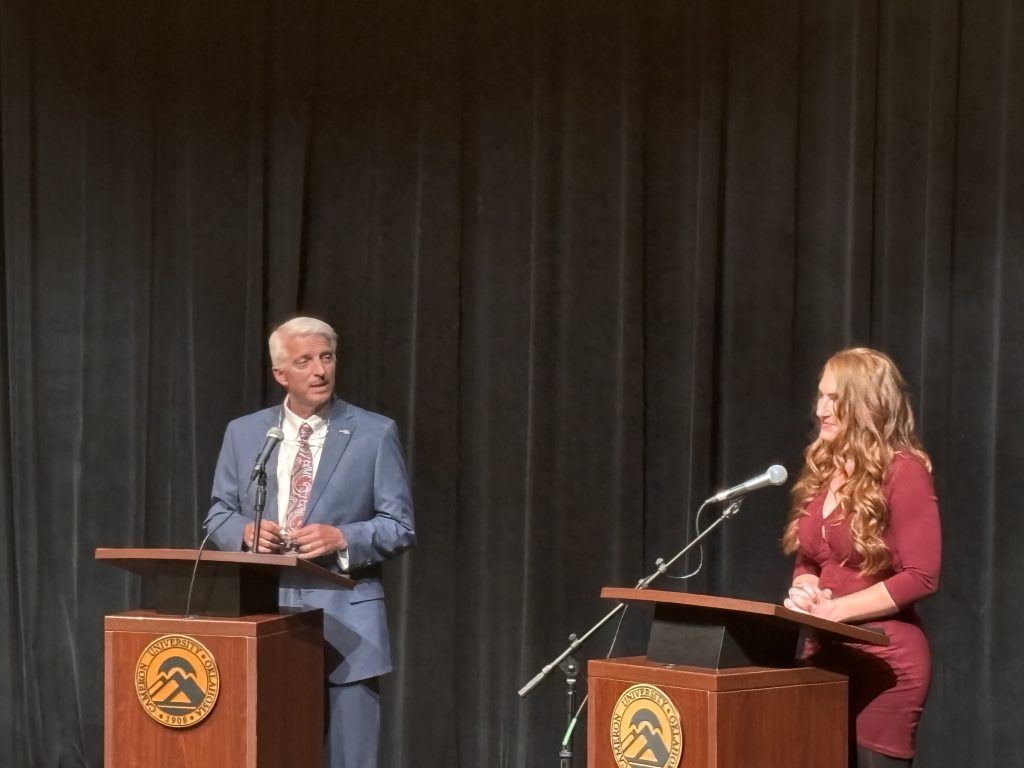
You can view the full recording of last night’s debate here:
KSWO Live: State Superintendent Runoff Debate
Looking Back: The Path to the Runoff
This latest discussion builds upon a series of candidate forums held earlier this year. In February, the Lawton Town Crier provided coverage of a forum in Elgin, Oklahoma, where candidates discussed their visions for public education and school management.
Review our previous coverage from February 16, 2026:
OK Superintendent Candidate Forum — Elgin, OK
Curriculum, Phonics, and the “Trump Bibles” Debate
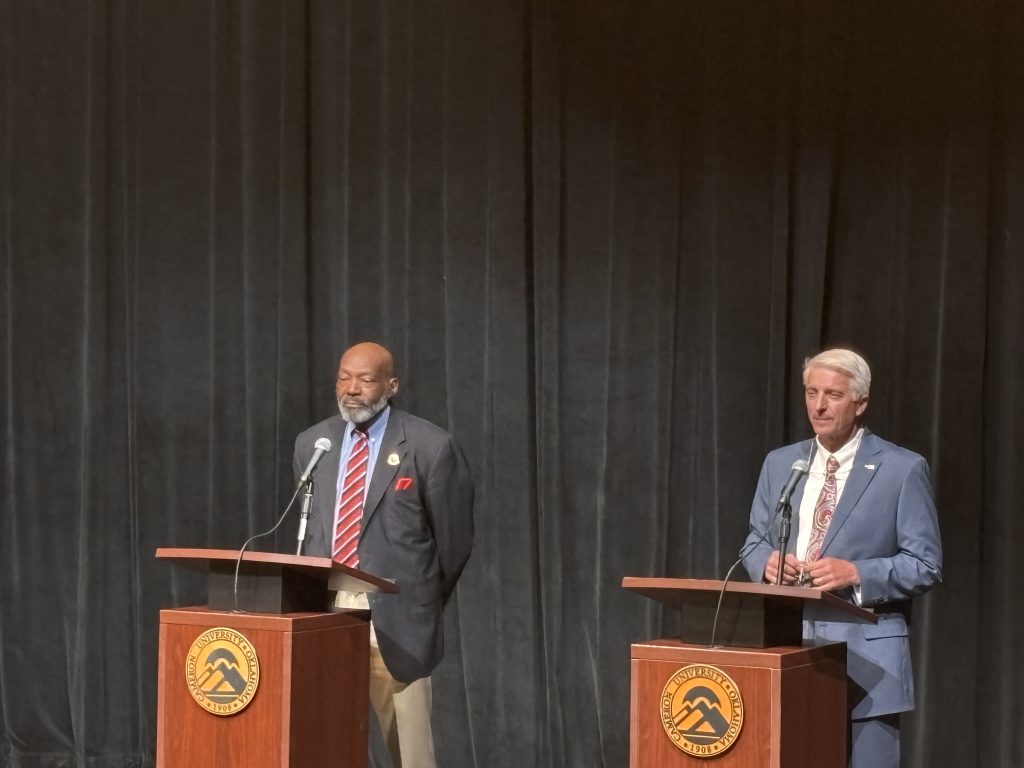
Foundational learning and curriculum standards served as early battlegrounds. Both candidates voiced opposition to social promotion and threw their support behind phonics-based instruction. However, their pathways diverged on implementation: Taylor leaned heavily on statutory talking points and the expansion of specialized literacy roles, whereas Franklin emphasized empowering actual classroom teachers to lead the charge.
The tension escalated sharply during discussions regarding religion in the classroom. Taylor introduced historical framing into the discussion by invoking The New England Primer. In stark contrast, Franklin drew a firm line against the modern integration of “Trump Bibles” into public schools, characterizing the mandate as a “bridge too far” that places an unwarranted burden on districts.
When pressed on parental rights and sensitive hypotheticals involving contemporary media references, Taylor deferred strictly to parental authority. Franklin, meanwhile, countered by emphasizing adherence to established state standards while working closely alongside local school administration.
OSDE Management, Ryan Walters’ Legacy, and Ethics
Agency oversight under current State Superintendent Ryan Walters became one of the night’s most contentious flashpoints.
Taylor argued that a much larger share of problem teacher certificates should have been revoked, criticizing past institutional inertia as “passing the trash.” Franklin took a different tack, expressing deep reservations regarding Walters’ management style and the controversial figures he chooses to surround himself with.
Political alignments and party platforms also took center stage. Taylor distanced himself from Walters’ style while noting his endorsement from Dr. John Cox, and challenged Franklin on his familiarity with the state Republican party platform. Franklin pushed back forcefully, declaring that his run is “not a hobby” and pledging to exit politics entirely if he does not secure the primary victory.
The sparring even crossed into historical figures and past political movements, highlighted by a notable slip of the tongue when Taylor intended to invoke Anita Bryant as a historical cautionary figure but mistakenly referenced Anita Hill.
Workforce Realities and Higher Education Disconnect
Addressing the state’s severe teacher retention crisis, Franklin underscored the necessity of robust classroom-level support and invoked the historical budgeting and governance approach of former Governor Henry Bellmon to help rein in surging class sizes.
When moderators questioned the disconnect between common education and higher education, Taylor diagnosed a core failure in teacher preparation programs, arguing that educators are insufficiently trained in classroom management. Franklin countered by advocating for true, collaborative partnerships across all tiers of the educational ladder.
Rapid-Fire Policy and a Volatile Audience Atmosphere
In a series of rapid-fire questions, clear policy differences emerged:
- Screen Time Limits: Franklin registered firm opposition to legislative mandates restricting screen time, while Taylor expressed a preference for reduced exposure managed strictly through local discretion rather than top-down state laws.
- General Election Accountability: Both men confirmed their commitment to debating the Democratic opponent in October.
Beyond the podiums, the room itself was a character in the night’s proceedings. The audience proved to be vocally engaged—and at times sharply divided—with attendees occasionally laughing, murmuring, or audibly telling Franklin to be quiet during his extended responses.
Closing Arguments Ahead of August 25
As the clock wound down, both candidates delivered contrasting closing pitches. Taylor shed his early-debate nerves to finish with high energy, directing voters’ attention toward historic low voter turnout trends and the resources offered by the Oklahoma Public School Resource Center. Franklin delivered a steady, measured closing appeal centered on backing local educators and stripping partisan politics out of the State Superintendent’s office.
Voters head to the polls on August 25 to decide which vision will shape the future of Oklahoma’s public school system.
For more details, watch the full debate recording via KSWO’s Live Stream, and revisit earlier candidate dialogue with the Lawton Town Crier’s coverage of the February 16 Candidate Forum in Elgin.