Overview of the Session
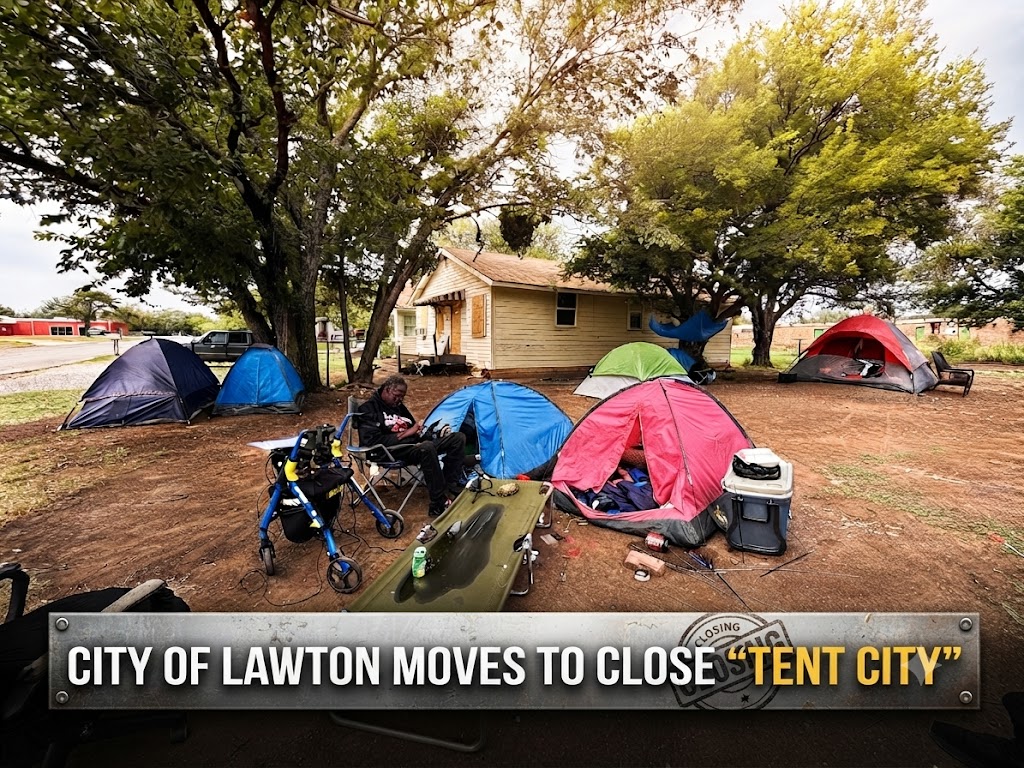
During the Lawton City Council meeting, the agenda featured a critical report from the Salvation Army detailing a strategic plan to combat chronic homelessness. The presentation quickly shifted into a broader, highly charged debate concerning public safety, resource allocation, and the future viability of regional unhoused support structures located off SW E Avenue in Ward 5.
Key Discussion Points & Reports
- The Strategic Plan & Cost Projections: The Salvation Army outlined its phased approach to managing the unhoused population, distributing resource referral sheets and emphasizing collaboration. Officials estimated that sustaining long-term care and management for individuals who decline standard assistance falls between $975,000 and $1.6 million annually.
- Phase II and Accountability: Discussions turned toward transitioning into “Phase II.” This introduces stricter operational structures, including guidelines for food distribution (such as eliminating to-go plates in favor of structured settings) and integrating faith-based outreach where assistance is paired with hearing the message of their faith.
- Safety, Environment, and Legal Boundaries:
- Presenters highlighted severe risks at the current site off SW E Avenue in Ward 5, noting the location sits directly within a flood zone, putting the city on notice.
- Growing safety issues were heavily emphasized, including reports of rampant drug use, localized violence (such as references to firearm discharges and exploited populations), and animal welfare concerns. The report explicitly highlighted that violence and crimes within the tent city pose a clear and present danger to the community, noting that drug dealers have openly operated within the encampment for over a year and a half.
- The presenter from the Salvation Army invoked HIPAA when discussing the complexities of moving individuals out of the encampment, prompting internal questions about the legal and operational definitions being applied.
Council Response and Next Steps
As the meeting progressed past the initial report, council members and local leadership pressed for definitive timelines and solutions:
- Clashing Priorities and Dialogue: Dialogue touched on tensions between local entities and the city, the categorization of camp residents by risk or behavior tiers, tracking individuals utilizing regional support systems, and concerns over whether assistance models can effectively follow people outside city limits.
- Impending Closure Push: Expressing mounting urgency over public safety and environmental liabilities, council members and community voices pushed for definitive action. Taron Epps stated that the city absolutely needs to shut down the tent city and later reinforced that view by emphasizing that the situation is fundamentally a law enforcement issue.
- Motions, Leadership Stances, and Final Vote: Randy Warren (Ward 8) made a motion to direct the city manager to create a task force and place a police officer at the tent city twenty-four seven. Pushing back against cutting the prior 60-day timeline short, Mr. Brown (Ward 3) reiterated his objection, emphasizing that the council had previously committed to that duration and arguing that the camp is fundamentally a law enforcement issue because of the criminals involved. This position found broad backing: Williams (Ward 7) explicitly stated she agreed with Mr. Brown, and Hooten (Ward 1) voiced strong alignment with Brown’s stance. Weighing in on the enforcement debate, Mayor Booker stated, “we could direct the City manager to enforce the law,” as questions persisted regarding police involvement. Ultimately, the motion carried with a unanimous 8-0 vote, moving the initiative forward.
ahead of public comments.