
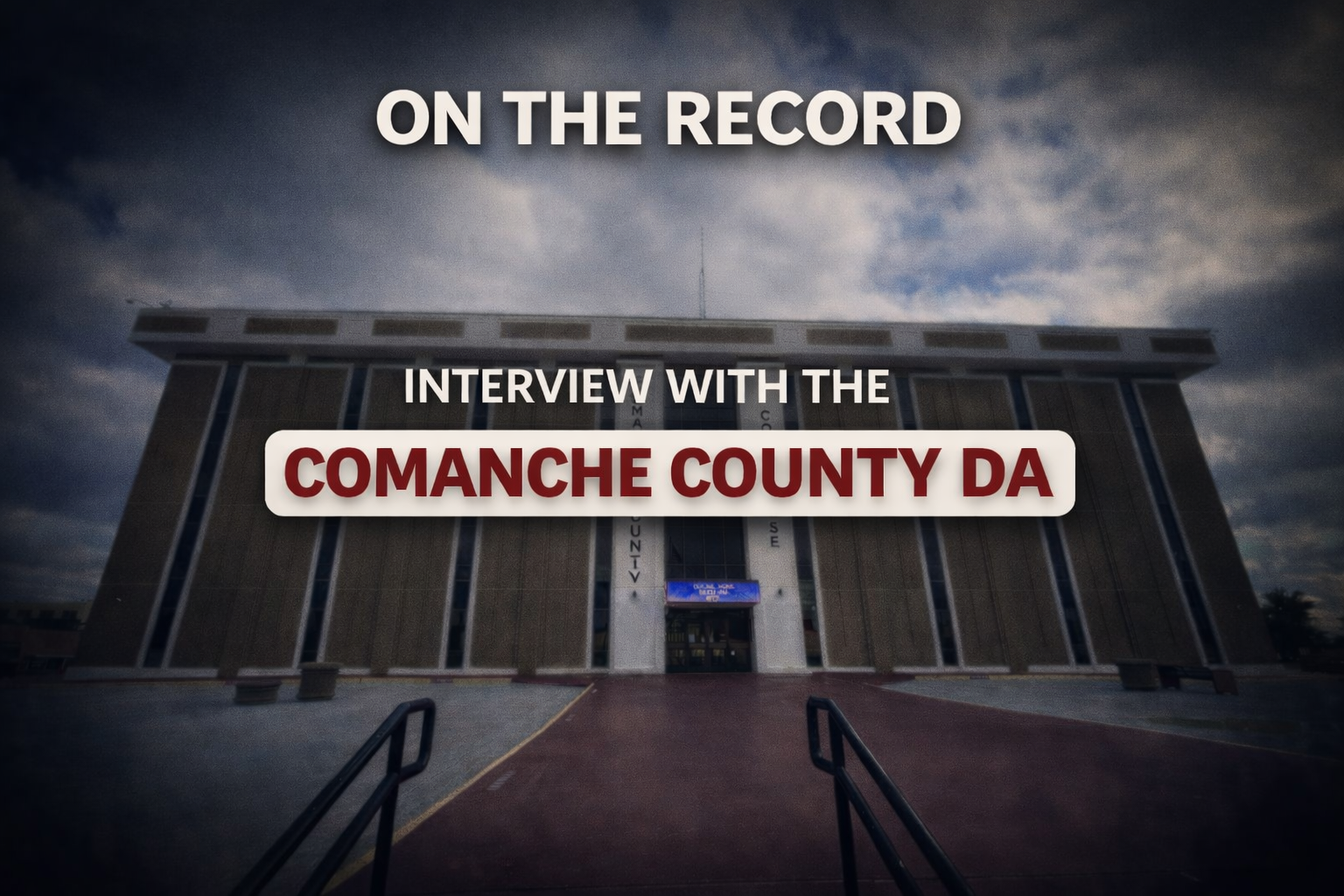
Public safety, crime, and community trust affect daily life in Comanche County—and they’re not always easy conversations. In this full, unedited On The Record interview, I sat down with Oklahoma District 5 District Attorney Kyle Cabelka (Comanche & Cotton Counties) to talk through how the prosecution side of the system works, what the public often misunderstands, and what current trends are shaping public safety locally.
This interview is presented in full, with no cuts.
Watch the full interview
Chapters / Timestamps
00:00 Intro / why this interview
00:46 Who Kyle Cabelka is + DA jurisdiction (Comanche & Cotton)
01:44 Path to DA (Cameron → law school → DA’s office)
04:00 What “justice” means in practice
05:37 Prosecutorial discretion + “interest of justice” dismissals
07:24 “Pressing charges” misconception (how charging actually works)
11:08 DA civil responsibilities (county legal counsel)
13:30 Drug trends: meth vs fentanyl + overdose realities
17:23 Gangs + violent crime trends + younger offenders
19:49 Marijuana enforcement changes + DUI implications
22:13 Diversion, probation, and second-chance pathways
28:43 Jurisdiction coordination: tribal / federal / Fort Sill + immigration cases
33:42 International vs local gangs + prison dynamics
36:52 2026 trends: felony filings, homicides, crimes against children, CSAM
42:32 Property crime + retail theft thresholds
44:12 Technology in policing/prosecution (cameras, retail systems)
46:08 LPR/Flock use, effectiveness, and public trust
49:06 Insurance verification cameras vs Flock (key distinction)
51:03 Are LPR records public? + oversight discussion
55:14 Future tools: CODIS, ballistics databases, field testing, victim-centered law changes
01:02:11 Closing + possible follow-up interview
What we covered
Topics discussed include:
- What a District Attorney actually does (criminal and civil responsibilities)
- How charging decisions work (and the common “pressing charges” misconception)
- Prosecutorial discretion and “interest of justice” dismissals
- Diversion programs, probation, and accountability
- Drug trends (meth, fentanyl) and overdose realities
- Gangs, violent crime trends, and youth involvement
- Marijuana enforcement changes and DUI implications
- Technology in policing and prosecution (including cameras, LPRs/Flock, CODIS, ballistics databases)
- Coordination across jurisdictions (tribal, federal, Fort Sill, county agencies)
- Crimes against children and CSAM trends
- Retail theft thresholds and property crime trends
Quick note on the camera discussion (Flock vs. insurance verification)
One section that will be especially relevant to ongoing online discussion is the distinction between Flock-style LPR/ALPR systems and the insurance verification camera system (which is separate, and designed around uninsured motorist enforcement). We walk through how those systems differ and what that means in practice.
Stay connected
- Facebook: http://www.facebook.com/lawtontowncrier
- Website: https://www.lawtontowncrier.com
- Ko-fi: https://ko-fi.com/lawtontowncrier
- Email: newsroom@lawtontowncrier.com
- X (Twitter): https://x.com/lawtoncrier
Lawton Town Crier is independent and non-partisan. This interview is presented for the public record.